
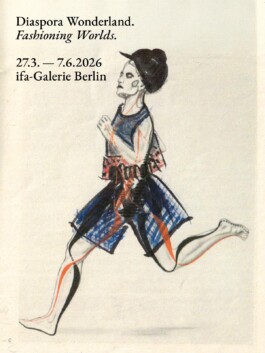
TRIBUNE LOTFI AOULAD | MARCH 2026
Diaspora Wonderland: Fashioning Worlds
There are cities one chooses.
Others choose you.
And then, there is Berlin.
Berlin caught me by surprise, during a grey winter in 2023. At the time, I was coordinating UNESCO’s report on the fashion
industry in Africa and visited the city for Berlin Fashion Week. Fascinated by the continent’s creative dynamics, I felt the need to explore a European scene beyond established circuits, in search of points of resonance. I had learned German in school, a language that had remained dormant in a corner of my memory.
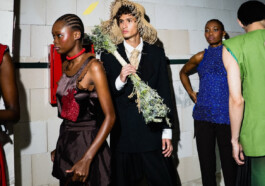
I expected eccentric runway shows staged in abandoned bunkers. Instead, I encountered a city that thinks through the body. It tells itself through its margins. It continuously invents new ways of creating, far from imperatives of performance and immediate visibility. In studios, squats, galleries, independent showrooms and on the street, I discovered different styles. Buki Akomolafe, Buzigahill, GmbH, Kenneth Ize, Namilia, Orange Culture, Sia Arnika, Société Angelique and many others. Designers, often rooted in multiple diasporas, carrying narratives of exile, joy, repair, encounter and hope. Coming from the Franco- Moroccan diaspora myself, in search of a cultural space where I could fully exist, I felt like a Berliner, almost as a Kennedy-esque fantasy, though this time in a discreet bar in Neukölln, surrounded by silhouettes dressed in urban fashion.
Jacques Attali once wrote that noise is a form of violence, while music is prophecy: by listening to it, one might foresee the future of societies. What if fashion carried a similar power? Dressing would then become an instinctive gesture, a way of sensing the present, preparing for what lies ahead and daring to inhabit one’s existence.
Fashion is both a marker of power and of restriction. From Renaissance sumptuary laws regulating access to certain fabrics to contemporary dress codes and prohibitions, fashion has often served as an instrument of social control. Yet it can also enable forms of liberation: through non-gendered clothing that resists assigned identities, or through sustainable and recycled practices that challenge extractive systems.
Long kept at a distance from the realm of the “fine arts”, fashion is nevertheless a creative act that dialogues with architecture, cinema, visual arts, music, literature and of course craftsmanship. Fashion reveals our intimate relationship to time, territory and bodies. Informed by cultural practices and ancestral know-how, it is continuously transformed through innovation. Fashion makes visible cultures, memories, tensions and desires, and shapes the way bodies project themselves into social space. Fashion speaks of the world and at the same time, it also tells the world who we are.
Each designer interprets a gesture, a practice, a material through what moves them and from where they stand. Fashion thus becomes a sensory medium, capable of revealing shifts related to identity, gender, sensuality, heritage and imagination. It is no coincidence that fashion now attracts generations of multidisciplinary artists who find in it a space for narration. It is no longer only about creating a garment, but about rendering an entire universe visible.
This is the context within which Diaspora Wonderland takes shape. Conceived as a circular exhibition touring different fashion hubs, it highlights a generation of artists from Afro-Mediterranean diasporas who narrate themselves through fashion. The exhibition explores how stories travel through bodies and territories. Children born of exile grow up with stories of lands left behind, transmitted by parents who themselves have been distanced from these places and their transformations. From this disjunction emerge powerful imaginaries, nurtured within diasporic circles and shared far beyond them. The term diaspora, from the Greek speiro – “to sow” – evokes far more than dispersion. It speaks of bonds, attachments, wounds and above all, creation. From the tension of exile, between loss and reinvention, wonderlands emerge: territories where identity, desire and memory intertwine. Through fashion, design, visual arts, music and storytelling, Diaspora Wonderland invites a sensitive journey across these imagined territories that transcend real borders.
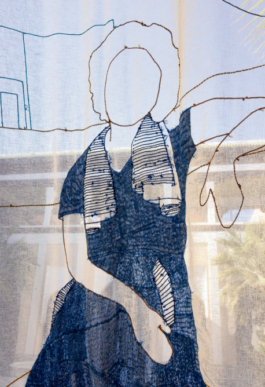
Monumental textile installations created by Margaux Derhy in collaboration with communities of women in Morocco weave a link between shores separated by the sea. They summon the figure of her grandmother Lydia, a woman relegated to the margins of official history, and pay tribute to those in the shadows who help carry the world. Embroidered together with an Amazigh women’s collective in Sidi R’bat, a suspended silhouette embodies the spectral presence of these forgotten women, whose names and gestures were rarely recorded, yet who remain deeply embedded both in Margaux Derhy’s work and in an entire generation of artists’ oeuvres. In these works, the figures of women who have been disregarded are embroidered in order to stitch together a collective memory.
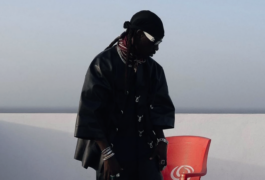
Rapper and filmmaker NIX explores cultural heritage, the place of love and the meaning of human trajectories. The short film presented in the exhibition was shot in a village in Senegal and marks a movement of withdrawal – an instinctive gesture of recentering. NIX isolates himself in Casamance, on the land of his ancestors, in an attempt at reconnecting with his spirituality and identity, which he considers the deep sources of his inspiration. Yet a void persists, as though an essential part of this inspiration depends on a missing fragment of this wonderland.
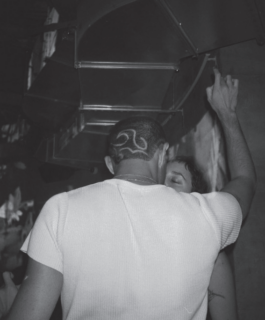
OEUVRES D'ENFANTS @DASRELAIS FESTIVAL 2018
The film immerses viewers in the thoughts and memories of an artist seeking to reconstruct himself from the fragments left by a rupture, where love is both a driving force and felt through absence. It highlights a vestimentary aesthetic situated at the intersection of tradition, costume and contemporary urban fashion, underscoring the tension between illusion and reality.
The work of Sarah Makharine interrogates intimacy as a space of collective narration. Immersed bodies, maternal figures, the sea and filiation come together in installations where photography intersects with questions of transmission and exile. Among the images presented, a photograph of her mother immersed in the sea dialogues with an image of the artist herself submerged during a spiritual bath – the mikveh. This ritual gesture echoes an inheritance both spiritual and cultural passed from mother to daughter, much like the relationship to fashion she inherited from a mother who worked in a textile shop.
Her close relationship to body and material led Sarah Makharine to push her artistic explorations into the spheres of the fashion industry. The series is completed by Mariée du Kosovo, a photograph taken in Kosovo. A bride in a traditionally embroidered dress completes a founding trinity – mother, sea, marriage – from which the artist develops a universe gravitating around the body and the garment. This figure echoes fashion show codes, according to which the bridal gown traditionally marks the closing of the runway.
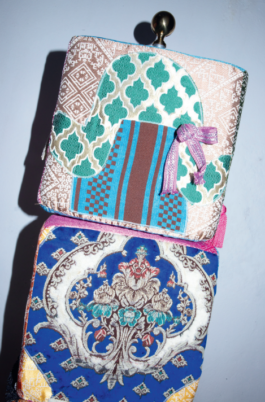
Through Zoubida, Sophia Kacimi reinterprets Moroccan interior textiles – her personal “madeleine de Proust” – within a pop aesthetic shaped by her life in London. By moving these fabrics from the domestic sphere into public space, and through the figure of the doll, she revisits her childhood, which was also spent in her mother’s clothing shop. Developed in collaboration with artisan communities, her work proposes a sensory, playful and deeply transgenerational approach to textile. Play becomes a tool for activating craftsmanship, memory and collective making. The installation consists of three monumental dolls – Malika, Ben Malika and Bint Malika – constructed from stackable cubic modules. Heads, bodies and feet can be rotated, producing shifting faces and unstable identities. The form resists fixity: meaning, hierarchy and narration remain open to recomposition.
The surfaces are composed of textiles drawn from past Zoubida collections. These fabrics function as material archives that bear traces of gestures, uses and bodies. Reassembled through patchwork and collage, they displace the notion of waste to place continuity at the heart of the work. Like Russian nesting dolls, the three figures operate as interwoven generations – neither individual nor symbolic, but relational. Play becomes a critical structure: meaning is produced through participation.
Berlin-based German-Nigerian designer Buki Akomolafe reveals the backstage of her creative process through Buki: Behind the Scenes. Sketches, materials, images and garments compose a universe shaped by the intimacy of her personal history and by the perseverance required to create from within Berlin. Fragments form a visual language in which fashion becomes at once refuge, affirmation and projection.
We return to Berlin. A city of reunification, it offers a field of experimentation freed from certain norms associated with established fashion capitals. Berlin is a somatic city. It bears the scars of history, the fractures of war and the desire for reconstruction. Here, fashion can become what it is at its core: a hybrid field where tradition and innovation intertwine to propose other ways of existing in the world.
Lotfi Aoulad
PARTAGER CET ARTICLE
À PROPOS DE LOTFI AOULAD
D’abord avocat, puis conseiller en politiques publiques, son parcours est traversé par une volonté d’habiter différents mondes : de la banlieue de Saint-Denis aux institutions internationales, en passant par des communautés autogérées en milieu rural, ainsi que par les milieux hospitaliers et carcéraux. En 2024, il est certifié doula pour l’accompagnement à la naissance, après une formation d'un an à la Maternité des Lilas. Il est membre du CA de l’association Rêv'Elles. Il a également été codirecteur de la Revue de littérature méditerranéenne Nejma et soutient plusieurs initiatives dans le secteur des arts et de la mode. Il est membre du comité d'expert pour le Prix de la Mode du Monde Arabe.
RELATED ARTICLES

BIEN NAÎTRE LOTFI ALOUAD | FÉVRIER 25
Diaspora Wonderland :
Un voyage émotionnel à travers les récits afro-méditerranéens

TRIBUNE LOTFI AOULAD | MARCH 2026
Diaspora Wonderland: Fashioning Worlds
There are cities one chooses.
Others choose you.
And then, there is Berlin.
Berlin caught me by surprise, during a grey winter in 2023. At the time, I was coordinating UNESCO’s report on the fashion
industry in Africa and visited the city for Berlin Fashion Week. Fascinated by the continent’s creative dynamics, I felt the need to explore a European scene beyond established circuits, in search of points of resonance. I had learned German in school, a language that had remained dormant in a corner of my memory.
I expected eccentric runway shows staged in abandoned bunkers. Instead, I encountered a city that thinks through the body. It tells itself through its margins. It continuously invents new ways of creating, far from imperatives of performance and immediate visibility. In studios, squats, galleries, independent showrooms and on the street, I discovered different styles. Buki Akomolafe, Buzigahill, GmbH, Kenneth Ize, Namilia, Orange Culture, Sia Arnika, Société Angelique and many others. Designers, often rooted in multiple diasporas, carrying narratives of exile, joy, repair, encounter and hope. Coming from the Franco- Moroccan diaspora myself, in search of a cultural space where I could fully exist, I felt like a Berliner, almost as a Kennedy-esque fantasy, though this time in a discreet bar in Neukölln, surrounded by silhouettes dressed in urban fashion.
Jacques Attali once wrote that noise is a form of violence, while music is prophecy: by listening to it, one might foresee the future of societies. What if fashion carried a similar power? Dressing would then become an instinctive gesture, a way of sensing the present, preparing for what lies ahead and daring to inhabit one’s existence.
Fashion is both a marker of power and of restriction. From Renaissance sumptuary laws regulating access to certain fabrics to contemporary dress codes and prohibitions, fashion has often served as an instrument of social control. Yet it can also enable forms of liberation: through non-gendered clothing that resists assigned identities, or through sustainable and recycled practices that challenge extractive systems.
Long kept at a distance from the realm of the “fine arts”, fashion is nevertheless a creative act that dialogues with architecture, cinema, visual arts, music, literature and of course craftsmanship. Fashion reveals our intimate relationship to time, territory and bodies. Informed by cultural practices and ancestral know-how, it is continuously transformed through innovation. Fashion makes visible cultures, memories, tensions and desires, and shapes the way bodies project themselves into social space. Fashion speaks of the world and at the same time, it also tells the world who we are.
Each designer interprets a gesture, a practice, a material through what moves them and from where they stand. Fashion thus becomes a sensory medium, capable of revealing shifts related to identity, gender, sensuality, heritage and imagination. It is no coincidence that fashion now attracts generations of multidisciplinary artists who find in it a space for narration. It is no longer only about creating a garment, but about rendering an entire universe visible.
This is the context within which Diaspora Wonderland takes shape. Conceived as a circular exhibition touring different fashion hubs, it highlights a generation of artists from Afro-Mediterranean diasporas who narrate themselves through fashion. The exhibition explores how stories travel through bodies and territories. Children born of exile grow up with stories of lands left behind, transmitted by parents who themselves have been distanced from these places and their transformations. From this disjunction emerge powerful imaginaries, nurtured within diasporic circles and shared far beyond them. The term diaspora, from the Greek speiro – “to sow” – evokes far more than dispersion. It speaks of bonds, attachments, wounds and above all, creation. From the tension of exile, between loss and reinvention, wonderlands emerge: territories where identity, desire and memory intertwine. Through fashion, design, visual arts, music and storytelling, Diaspora Wonderland invites a sensitive journey across these imagined territories that transcend real borders.
Monumental textile installations created by Margaux Derhy in collaboration with communities of women in Morocco weave a link between shores separated by the sea. They summon the figure of her grandmother Lydia, a woman relegated to the margins of official history, and pay tribute to those in the shadows who help carry the world. Embroidered together with an Amazigh women’s collective in Sidi R’bat, a suspended silhouette embodies the spectral presence of these forgotten women, whose names and gestures were rarely recorded, yet who remain deeply embedded both in Margaux Derhy’s work and in an entire generation of artists’ oeuvres. In these works, the figures of women who have been disregarded are embroidered in order to stitch together a collective memory.
Rapper and filmmaker NIX explores cultural heritage, the place of love and the meaning of human trajectories. The short film presented in the exhibition was shot in a village in Senegal and marks a movement of withdrawal – an instinctive gesture of recentering. NIX isolates himself in Casamance, on the land of his ancestors, in an attempt at reconnecting with his spirituality and identity, which he considers the deep sources of his inspiration. Yet a void persists, as though an essential part of this inspiration depends on a missing fragment of this wonderland.

OEUVRES D'ENFANTS @DASRELAIS FESTIVAL 2018
The film immerses viewers in the thoughts and memories of an artist seeking to reconstruct himself from the fragments left by a rupture, where love is both a driving force and felt through absence. It highlights a vestimentary aesthetic situated at the intersection of tradition, costume and contemporary urban fashion, underscoring the tension between illusion and reality.
The work of Sarah Makharine interrogates intimacy as a space of collective narration. Immersed bodies, maternal figures, the sea and filiation come together in installations where photography intersects with questions of transmission and exile. Among the images presented, a photograph of her mother immersed in the sea dialogues with an image of the artist herself submerged during a spiritual bath – the mikveh. This ritual gesture echoes an inheritance both spiritual and cultural passed from mother to daughter, much like the relationship to fashion she inherited from a mother who worked in a textile shop.
Her close relationship to body and material led Sarah Makharine to push her artistic explorations into the spheres of the fashion industry. The series is completed by Mariée du Kosovo, a photograph taken in Kosovo. A bride in a traditionally embroidered dress completes a founding trinity – mother, sea, marriage – from which the artist develops a universe gravitating around the body and the garment. This figure echoes fashion show codes, according to which the bridal gown traditionally marks the closing of the runway.
Through Zoubida, Sophia Kacimi reinterprets Moroccan interior textiles – her personal “madeleine de Proust” – within a pop aesthetic shaped by her life in London. By moving these fabrics from the domestic sphere into public space, and through the figure of the doll, she revisits her childhood, which was also spent in her mother’s clothing shop. Developed in collaboration with artisan communities, her work proposes a sensory, playful and deeply transgenerational approach to textile. Play becomes a tool for activating craftsmanship, memory and collective making. The installation consists of three monumental dolls – Malika, Ben Malika and Bint Malika – constructed from stackable cubic modules. Heads, bodies and feet can be rotated, producing shifting faces and unstable identities. The form resists fixity: meaning, hierarchy and narration remain open to recomposition.
The surfaces are composed of textiles drawn from past Zoubida collections. These fabrics function as material archives that bear traces of gestures, uses and bodies. Reassembled through patchwork and collage, they displace the notion of waste to place continuity at the heart of the work. Like Russian nesting dolls, the three figures operate as interwoven generations – neither individual nor symbolic, but relational. Play becomes a critical structure: meaning is produced through participation.
Berlin-based German-Nigerian designer Buki Akomolafe reveals the backstage of her creative process through Buki: Behind the Scenes. Sketches, materials, images and garments compose a universe shaped by the intimacy of her personal history and by the perseverance required to create from within Berlin. Fragments form a visual language in which fashion becomes at once refuge, affirmation and projection.
We return to Berlin. A city of reunification, it offers a field of experimentation freed from certain norms associated with established fashion capitals. Berlin is a somatic city. It bears the scars of history, the fractures of war and the desire for reconstruction. Here, fashion can become what it is at its core: a hybrid field where tradition and innovation intertwine to propose other ways of existing in the world.
Lotfi Aoulad


PARTAGER CET ARTICLE
À PROPOS DE LOTFI AOULAD
D’abord avocat, puis conseiller en politiques publiques, son parcours est traversé par une volonté d’habiter différents mondes : de la banlieue de Saint-Denis aux institutions internationales, en passant par des communautés autogérées en milieu rural, ainsi que par les milieux hospitaliers et carcéraux. En 2024, il est certifié doula pour l’accompagnement à la naissance, après une formation d'un an à la Maternité des Lilas. Il est membre du CA de l’association Rêv'Elles. Il a également été codirecteur de la Revue de littérature méditerranéenne Nejma et soutient plusieurs initiatives dans le secteur des arts et de la mode. Il est membre du comité d'expert pour le Prix de la Mode du Monde Arabe.
RELATED ARTICLES
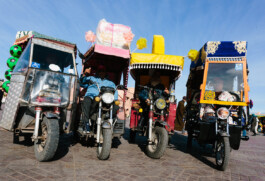
BIEN NAÎTRE LOTFI ALOUAD | FÉVRIER 25
Diaspora Wonderland :
Un voyage émotionnel à travers les récits afro-méditerranéens
CONTACT:
POUR TOUTE DEMANDE, VEUILLEZ CONTACTER
CONTACT@DASRELAIS.COM
DESIGN: SOLENN ROBIC
DÉVELOPPEMENT: ACAPTCHA
© DAS RELAIS 2025
CONTACT:
POUR TOUTE DEMANDE, VEUILLEZ CONTACTER
CONTACT@DASRELAIS.COM
DESIGN: SOLENN ROBIC
DÉVELOPPEMENT: ACAPTCHA
DAS RELAIS 2025